

PRESENTING SUPERB RESEARCH THAT ADVANCES THE FIELD OF EDUCATION
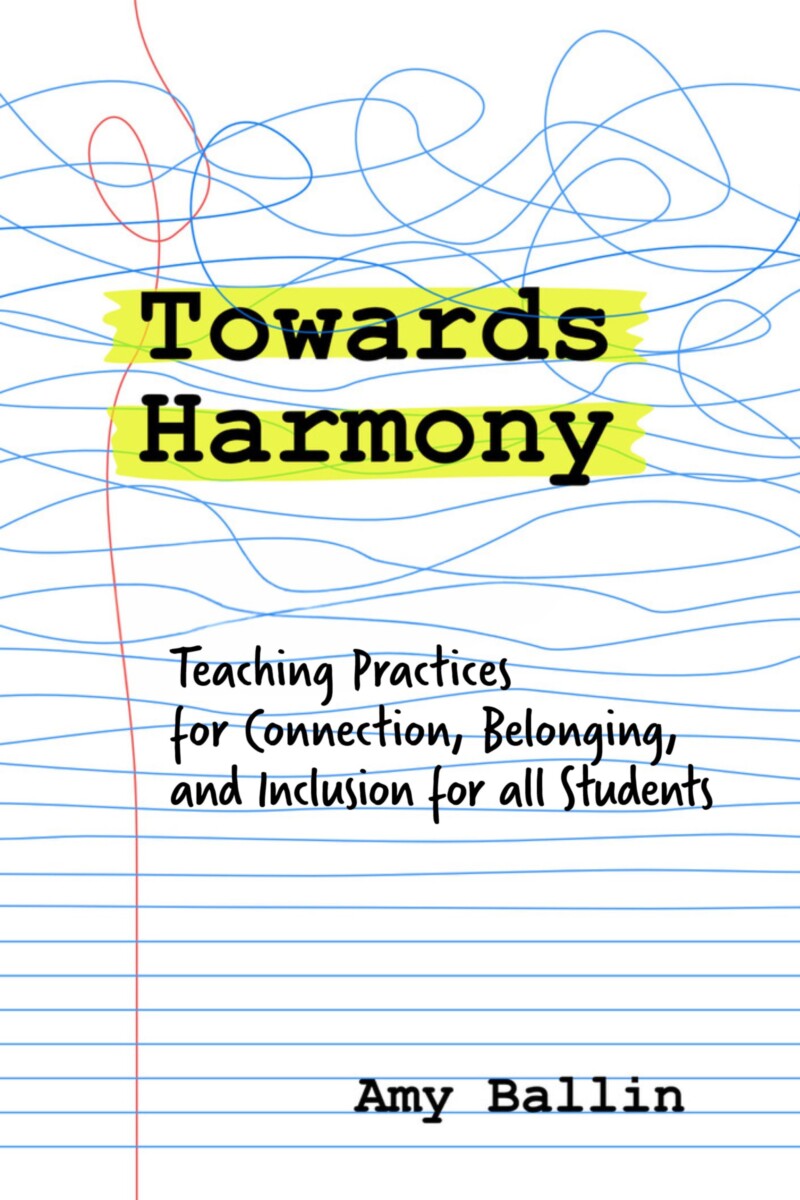
Toward Harmony
Teaching Practices for Connection, Belonging, and Inclusion for all Students
- Publisher
Myers Education Press - ISBN 9781975509996
- Language English
- Pages 125 pp.
- Size 6" x 9"
- Request Exam Copy
E-books are now distributed via VitalSource
VitalSource offer a more seamless way to access the ebook, and add some great new features including text-to-voice. You own your ebook for life, it is simply hosted on the vendor website, working much like Kindle and Nook. Click here to see more detailed information on this process.
- Publisher
Myers Education Press - ISBN 9781975510008
- Language English
- Pages 125 pp.
- Size 6" x 9"
- Request E-Exam Copy
The argument at the heart of Toward Harmony: Teaching Practices for Connection, Belonging, and Inclusion for All Students is simple but urgent: Students are not failing. Schools are failing to accommodate students’ full humanity, particularly those who learn, behave, or communicate in ways that deviate from the norm. Too often, differences are framed as disruptions.
Student mental health challenges have risen to a crisis level, causing a cascading effect of burnt-out teachers leaving the profession. Well-meaning administrators and educators often rely on tactics rooted in exclusion and isolation: removals, punishments, and labels, which they often realize do not work. Discipline policies and inclusion plans are failing the very children they were meant to support, often because they miss the underlying issues affecting students. To support educators, recent training programs, curricula, and books have focused on restorative practices and social-emotional skill-building, aiming to change how teachers approach students and how students manage emotions. Toward Harmony offers a fresh approach that reaches beyond social-emotional curricula and restorative circles. It engages educators in reflecting on and analyzing their practices while supporting innovative practices to support more students.
Toward Harmony emerged from years of Amy Ballin’s work alongside students and teachers seeking a better way to learn together. She witnessed how transformative it can be when teachers shift from a behavior-management mindset to one of listening, wondering, and adapting. Difference should not be viewed as a deficit but rather as a meaningful part of students' identities and communities. This volume offers an alternative approach, expanding relationships and a sense of belonging through practices grounded in multiple pedagogical frameworks. Disability Studies in Education (DSE) invites us to view disability as a social construct rather than a personal flaw. Transformative social-emotional learning, a term coined by the Center for Academic Social Emotional Learning (CASEL), centers on belonging, identity, and equity. Trauma-informed approaches, which remind us that trauma impacts behavior and impulse control, is also discussed. The book argues that behavior is not an act of defiance. Critical pedagogy, including the work of Freire and Shalaby, calls on us to listen and learn from students.
Toward Harmony is an essential book for a variety or education-oriented readers. Preservice teachers should incorporate it into their reading in preparation for dealing with the students from a variety of backgrounds and needs. College of Education faculty will want to use it as a core textbook in a wide range of classes. Mental health administrators will also find it informative in broadening their understanding of students’ needs.
Perfect for courses such as: Classroom Management and Classroom Community Building; School Social Work; Introductory Teacher Education; Teaching Special Education; Inclusion; Disability Studies; Trauma Informed Approaches; Race, Intersectionality, and Equity in Education; Social-Emotional Teaching and Learning
“This book will speak to the heart of every teacher and every parent. With candor and deep understanding from the research as well as her own experience as a learning and caring teacher, Ballin describes how to create harmonious classrooms that support every child. Informed by the science of learning and development and by the impact of trauma on learning, Ballin weaves her personal narrative with a wide body of evidence to offer practical strategies that will transform frustration and failure into acceptance and success. In this essential book for teachers striving to reach each student, parents advocating for their children's needs, and administrators with the power to shape supportive policies, Ballin gives us hope.”
Linda Darling-Hammond, Charles E Ducommun Professor of Education Emeritus, Stanford University, Founding President and Chief Knowledge Officer, Learning Policy Institute President, California State Board of Education
“At a time when democracy feels fragile, teachers face unprecedented burnout, and students struggle to engage both physically and emotionally. Toward Harmony meets this crisis with actionable strategies to restore mutual respect to our classrooms. By seamlessly weaving together personal narrative, academic research, and authentic student-teacher voices, Ballin provides practical steps for delivering a truly democratic classroom.”
Deborah Meier, author, teacher, principal, educational scholar
“Amy Ballin’s book is both timely and essential during a period of profound disruption in education. Toward Harmony offers educators a practical pathway for cultivating and sustaining classroom environments that center wellbeing, belonging, and equity. Drawing on her extensive experience as an educator, deep knowledge of educational research, and exceptional ability to listen to both teachers and students, Ballin shares invaluable strategies for fostering transformative social and emotional learning in classrooms at all levels. These strategies include practices that support educators in prioritizing their own wellbeing while also nurturing the wellbeing of their students.”
Deborah Donahue-Keegan, MSW, Ed.M., Ed.D., Department of Education / Civic Studies, Office of the Vice Provost for Institutional Inclusive Excellence (OVPIIE), Social Emotional Learning for Equity & Civic Teaching (SEL-E-CT) Program, Tufts University
“As a former special needs teacher and a principal for over 20 years, I wish this book had been available then. Filled with research-backed strategies, it is a must for any educator who values the uniqueness of every student and who is passionate about creating a caring and inclusive classroom environment. This should be required reading for any teacher, administrator or professional who wants to unlock the keys to reaching every student while creating a supportive community of learners. Dr. Ballin has done the research and now presents practical strategies for getting the most out of every student.”
Jim Gutstadt, Retired principal and special education teacher
Amy Ballin
Dr. Amy Ballin is a career educator and counselor. She worked in K-12 schools as both a teacher and counselor for over 25 years before getting her doctorate in education. She worked as an assistant professor at Simmons University and Antioch University, teaching pre-service special education teachers, and then spent two years at Walker Therapeutic and Educational programs, focusing on professional development in schools. Currently, Dr. Ballin works supporting schools and families as an educational consultant and parent coach (Amy Ballin Consulting, ABc).
She received her Bachelor of Science from Cornell University, majoring in environmental education. She earned a Master's in Science Teaching from Antioch/New England and worked as a science educator for ten years before earning her Master's in Social Work from Boston University. She received her Certificate of Advanced Graduate Studies (C.A.G.S.) in education administration and her Ph.D in education from Lesley University, where she explored theories of school culture, the ethics of special education, and student motivation.
Ballin’s scholarly interests include creative approaches to teaching pedagogy and social action to eradicate injustices embedded in our educational system. She believes in connecting children's social and emotional lives to their academic success. As such, she focuses on designing teaching methods to engage a wide range of learners in finding solutions for teaching children rather than blaming children. Her research area and interests include exploring how racial and socioeconomic assumptions intersect with the social construction of special education. Dr. Ballin’s book, The Quest for Meaningful Special Education (2016), explores these concepts in depth. She has authored numerous research articles and presented at myriad academic conferences on the impact of calming corners, trauma-sensitive approaches, secondary trauma, and anxiety in schools.

